Showing posts with label 2013. Show all posts

New Lotus Sports Cars Evora Type 124 Endurance Racecar

Lotus Evora Type 124 Endurance Racecar
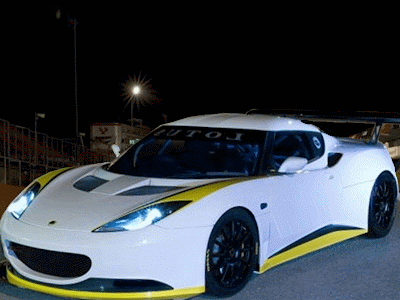
New Lotus Sports Cars Evora Type 124 Endurance Racecar - Proton-owned and British-based sports car maker Lotus has announced the Evora Type 124 Endurance Racecar (pronounced One Twenty Four). Based on the Evora road car, it is powered by a mid-mounted Toyota V6 powerplant. The engine is race-tuned and can output over 400PS, depending on race regulations. The power unit is linked to a 6 speed sequential transmission with steering wheel-mounted paddle shifters. It can weigh less than 1,200 kg, again depending on race regulations, thanks to an aluminium chassis, very strong lightweight forged aluminium wishbones and lightweight composite and carbon fiber panels.
Lotus Evora Type 124 Endurance Racecar interior
Lotus Sports Cars Evora Type 124 Endurance Racecar
The Lotus Evora Type 124 Endurance Racecar has been developed from the award-winning Evora road car and is built to FIA regulations and safety standards. Based on the standard Evora road car, the Evora Type 124 (pronounced One Twenty-four) will make its 24 hour racing debut at the ADAC Nurburgring 24 hours race. According to Lotus, the Evora was designed for racing from the start and this made it very easy for the team to convert the Evora into a racecar, thanks to the mid-engine layout, stiff bonded aluminium chassis and lightweight forced aluminium wishbones for the suspension.
Lotus Evora Type 124 Endurance Racecar design
The Type 124 (pronounced One Twenty Four) Endurance Racecar is the next step in the evolution of the Evora. The car will make its 24 hour racing debut at the ADAC Nürburgring 24 Hours which provides a great test for the Evora’s performance, efficiency and durability under tough and demanding endurance race conditions.
Lotus Evora Type 124 Endurance Racecar wallpapers
The Evora gets a race-tuned version of the Toyota V6 mated to a 6-speed sequential paddle shift racing gearbox, and it now produces over 400 PS which is well over the 100 PS per liter ratio. I wish they’d listed out more specifications as to the specs of the engine – I dig this kind of stuff. In stock form, the Evora makes 280 horsepower from its 3.5 liter V6 engine, but even for the road car its said that a supercharged version could come later putting out over 400 horses.
Lotus Evora Type 124 Endurance Racecar pictures
At the heart of the Lotus Evora are fundamental racecar elements: mid-engine layout, high-tech and super-stiff extruded and bonded aluminium chassis and very strong lightweight forged aluminium wishbones. All these elements mean that it is a natural evolution from the road going Lotus Evora to a competitive endurance racecar.
Lotus Evora Type 124 Endurance Racecar
From the outset the design team had intentions to take the Evora racing and the chassis was designed with this in mind. Endurance races are the perfect events to showcase the efficiency, handling and durability characteristics that have been fundamental to the concept of the Evora.
The Lotus Evora Type 124 Endurance Racecar has a race-tuned version of the mid-mounted Toyota V6 engine, with power increased to over 400 ps (depending on race regulations). Vehicle mass is expected to be reduced by up to 200 kg, bringing the weight of the racecar to less than 1200 kg (depending on race regulations).
Lotus Evora Type 124 Endurance Racecar
Further changes for the Lotus Evora Type 124 Endurance Racecar include a six speed sequential paddle shift racing gearbox, full FIA specification roll cage, FIA-compliant 120 litre ATL fuel system, FIA fire extinguisher system, competition carbon fibre rear wing, diffuser and front splitter.
The racecar is fitted with AP Racing 6 piston callipers front and rear, with a race-tuned Bosch ABS system, 4-way adjustable dampers and adjustable anti-roll bars. The racecar runs on 18” rims shod with Pirelli racing slicks and the wheels widths have been increased over the roadcar to 9 ½ J on the front and 11 J on the rear.
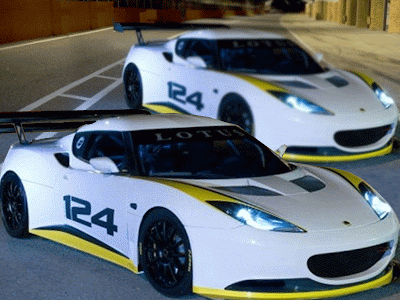
Lotus Evora Type 124 Endurance Racecar
Loads of goodies are added to the car – AP Racing 6 pot brakes on both front and back, a race-tuned Bosch ABS system, 4-way adjustable dampers, adjustable anti-roll bars, 18 inch wheels (nice and wide 9.5 from and 11 at the rear) with Pirelli slicks, a full FIA rollcage, an FIA 120 liter ATL fuel system, FIA fire extinguisher, yet weight is cut down from the production car to under 1200kg depending on race regulations. This is thanks to the use of carbon fiber extensively in the rear wing, diffuser, font splitter, and body panels.
Lotus Evora Type 124 Endurance Racecar
The aerodynamically efficient Lotus Evora Type 124 Endurance Racecar body design, made from lightweight composite and carbon fibre panels, remains predominantly unchanged from the road car, with the only modifications being to the lower sections of the front and rear clamshells and the side sills.
Lotus Evora Type 124 Endurance Racecar
Luke Bennett, Director of Lotus Cars Limited, said, “Motorsport has been in our blood ever since our founder, Colin Chapman, built the first Lotus back in 1948. We are proud of our motorsport history, which includes victories in Formula One, Le Mans, saloon car, rally car and sportscar racing around the world; more recently, we won the British GT3 Championship in 2006 with the Lotus Exige. The Lotus Evora Type 124 Endurance Racecar is from the same unique stable and we expect it to be a competitive racecar when we enter various endurance races next year.”
Lotus Evora Type 124 Endurance Racecar
Roger Becker, Vehicle Engineering Director for Group Lotus Plc said, “Every Lotus car is designed to be at home on the race track as well as the road, and the Evora is no different. Designed primarily as an everyday road car, the Evora’s lightweight and stiff structure, its aerodynamics and performance means that it is perfectly suited to taming race tracks around the world, and we are looking forward to seeing the new Lotus Evora Type 124 Endurance Racecar line up on the grid for the 2013 season.”
Lotus Evora Type 124 Endurance Racecar
The racecar is expected to compete in a number of endurance races in 2013/ 2013 forming part of a factory-supported race program. The races that are targeted are: The 2013 ADAC Nürburgring 24 Hours (Nürburgring Nordschleife, Germany) in May 2013, Merdeka Millennium 12 Hours (Sepang, Malaysia) in August 2013, BritCar 24 Hours (Silverstone, UK) in October 2013 and the Dubai 24 Hours (Dubai Autodrome, UAE) January 2013.

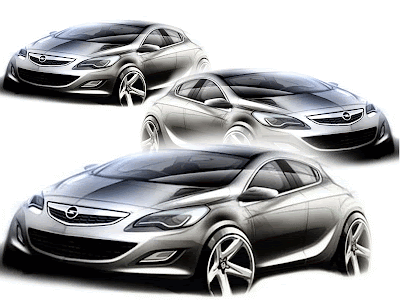
2013 Opel Astra GSI Concept Cars Third Millennium

2013 Opel Astra GSI Concept Cars
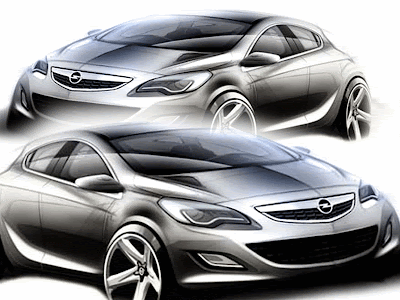
The new Opel Astra GSi will be unveiled in October at the Paris Auto Show and will go on sale later this year or early in 2013. The 2013 Opel Astra GSi will feature various new design elements, including a re-styled front bumper, new wheel arches, a small rear diffuser and double exhaust pipes.
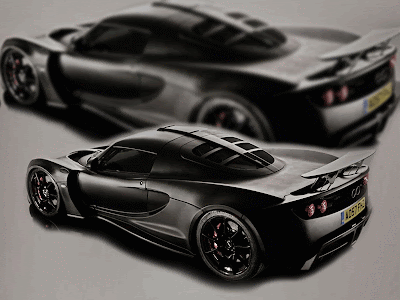
2013 Opel Astra GSI Concept Cars
2013 New Opel Astra GSI Concept Cars Third Millennium
Opel fans al already asking when will the new Astra GSI will make its debut. Today we have the answer for them: the new 2013 Opel Astra GSI will make its debut this autumn at the Paris Motor Show, according to the latest reports from Auto Motor und Sport.
The new Opel Astra GSi 5-door layout back to talk about himself, with eloquent spy photos. The famous symbol will return to sport compact Russelsheim later this year. In fact, the Astra GSi will officially introduce yourself to October at the Paris Motor Show and will be sharing the catwalk in Paris with the new Sports Cars Tourer estate.
2013 Opel Astra GSI Concept Cars
The new vehicle will carry, as expected, a 2.0-liter Turbo engine which will deliver around 190 hp… we do hope that this will get at least 200 hp in order to take on the Vw Golf GTI. Regarding the OPC version this will carry over 240 hp. The new Astra GSI will also come with a new body kit which will include wider wheel arches, a new front and rear bumper, new side sills, dual exhaust pipes and a dual-tone interior with Recaro sport buckets. Most sources say the 2013 Opel Astra GSi will only be available in the 5 door body style. The 3 door will be sold only as a OPC / GTC.
2013 Opel Astra GSI Concept Cars
The new Opel Astra GSi be the top version of the variant 5-door, while the symbol OPC will be given only to the three-door GTC. The 2013 New Opel Astra GSi third millennium will be equipped with the 2.0 Turbo petrol engine, whose maximum should be around 190-200 horses. The Astra OPC boasts a 2.0-litre turbocharged motor with 177kW. The GSI should feature about 140kW or so.
2013 Opel Astra GSI Concept Cars
The sports chassis will be recognizable to the wider wheel arches and front bumper changed. At the rear, as well as the letters GSi, Opel Astra in this version will be distinguished for the double exhaust. Even in the cockpit there are specific characterizations, such as two-tone sport seats.
The Astra GSi price will be announced at a later date.

2013 Jaguar Luxury Sports Cars New XK S Review

2013 Jaguar Luxury Sports Cars
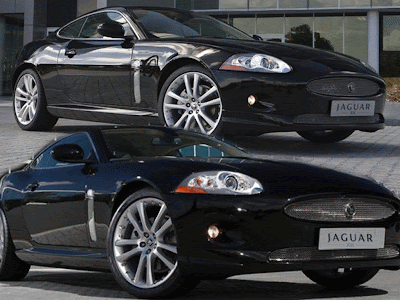
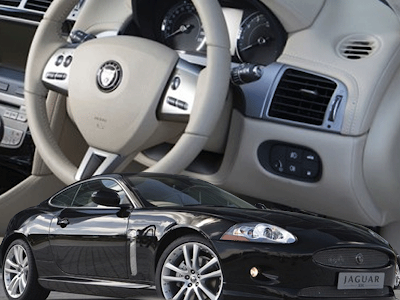
2013 Jaguar Luxury Sports Cars New XK S car Review Jaguar will be launched a new XK limited edition model this month, the Jaguar XK-S. Like every Jaguar to carry the XK badge, the XK-S is all about performance with style – plus a large helping of individuality. The Jaguar XK-S offers its own spin on the 4.2 liter V8 XK in coupe form.
2013 Jaguar Luxury Sports Cars interior
2013 Jaguar Luxury Sports Cars New XK S
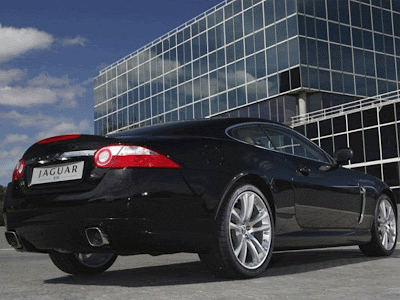
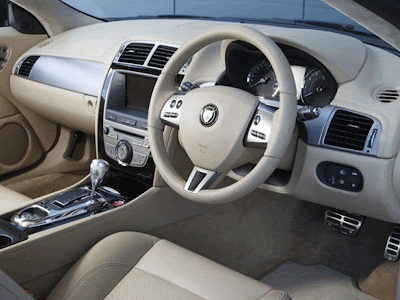
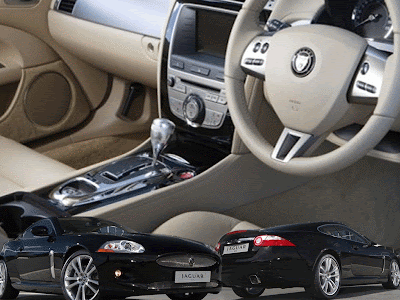
As well as introducing the exciting new XFR at Detroit auto show, Jaguar also decided to overhaul the XK coupe and convertible range. All the cars get revised exterior styling with a different front bumper and rear valance, rear LED lights, and color-coded side vents. Inside, Jaguar has changed the center console to incorporate its unique gear selector, a rotary control that pops up after starting the engine.2013 Jaguar Luxury Sports Cars New XK S Review
2013 Jaguar Luxury Sports Cars
The new engines feature direct injection and variable camshaft timing that is activated by torque generated by the opening and closing of the valves rather than by oil pressure. 
2013 Jaguar Luxury Sports Cars interior
The naturally aspirated engine has a new variable intake manifold and camshaft profile switching in the intake cam, where there is lower lift at low rpm, helping gas mileage and torque below 3000 rpm.
Jaguar Luxury Sports Cars 2013
The car offers a host of additional extras beyond the XK’s already impressive specification at no extra cost. In true Jaguar tradition, every XK-S will be a highly desirable car with an impressively accessible price tag.
2013 Jaguar Luxury Sports Cars
The Jaguar XK-S customer will benefit from dramatic 20-inch Senta alloy wheels, luxury sports interior, a sporty brushed aluminum gear knob and bright finish pedals plus distinctive body enhancements: new front and rear valence panels, chrome-finished side vents and bright finish upper and lower front mesh grilles, special tailpipe finishers and appliqués on both sides of the car.
2013 Jaguar Luxury Sports Cars
Jaguar said," Our cars meet the challenges of the modern world and the needs of today's consumers – and they're also true to the Jaguar philosophy of creating beautiful fast cars.'
2013 Jaguar Luxury Sports Cars
While Jaguar was at it, the range has been simplified to two models—the Portfolio and the R. The revised XKs go on sale this summer as 2013 models.2013 Jaguar Luxury Sports Cars New XK S Review

New 2013 Maserati GranCabrio Sports Car

2013 Maserati GranCabrio Sports Car

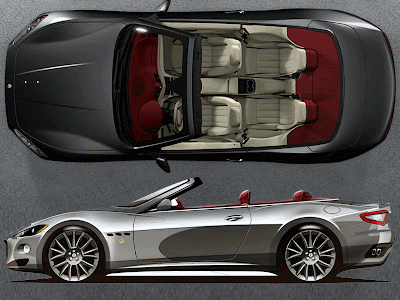
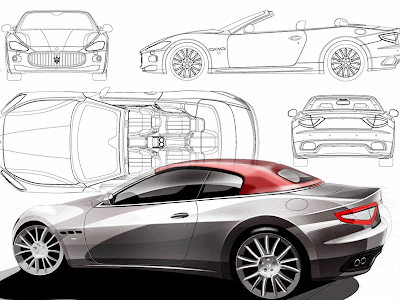
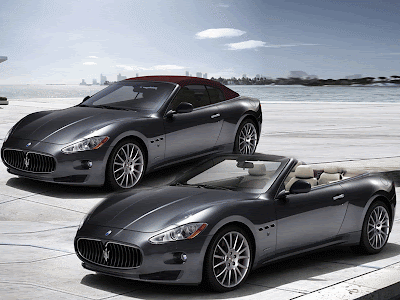
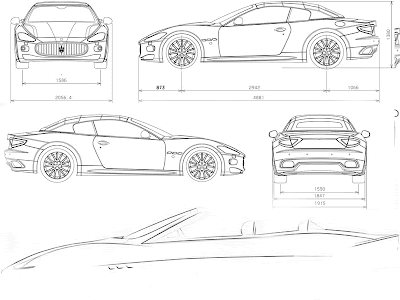
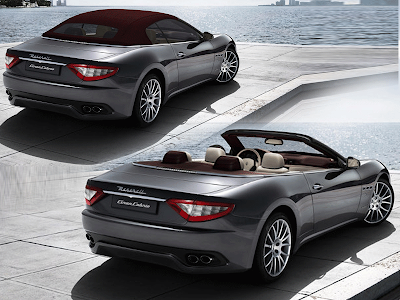
The Maserati GranCabrio will make its debut on September 15 at the upcoming Frankfurt Motor Show. The Maserati GranCabrio is a four-seat convertible that promises to offer enough space for all its occupants, completes Maserati’s product line-up that now consists of three different families of models: Quattroporte, GranTurismo, GranCabrio. New 2013 Maserati GranCabrio Sports Car
2013 Maserati GranCabrio Sports Car interior
2013 Maserati GranCabrio Sports Car

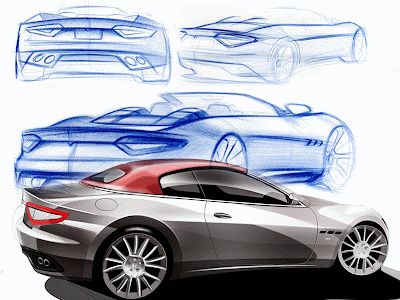
The open-top Maserati GranCabrio is pure Maserati. It is a Maserati in the truest sense, with an unmistakable Pininfarina design, spacious interior, handcrafted details, driving pleasure and high performances. The Maserati GranCabrio touches all five senses in an open-air experience that retains all the typical comfort and performance brio. Like all Maserati's open-top models, the Maserati GranCabrio is a special car intended for true connoisseurs.
Maserati GranCabrio Sports Car 2013
2013 Maserati GranCabrio Sports Car

The Maserati GranCabrio continues in the footsteps of the Maserati tradition in open-top models, and adds to a line-up of models that has made the history of the Modena manufacturer, such as the 1950 A6G Frua Spyder, the 3500GT Vignale Spyder (1960), the Mistral Spyder (1964), the Ghibli Spyder (1968) and the 2001 Maserati Spyder, the car Maserati chose for his comeback to the United States.
2013 Maserati GranCabrio Sports Car

True to its tradition, the Maserati GranCabrio yet opens a new chapter, because never before have four-seater top-down models been produced at the Viale Ciro Menotti Maserati factory in Modena. There are four proper seats are provided, so that the rear passengers are not merely supporting actors, but co-stars of the journey.
2013 Maserati GranCabrio Sports Car
2013 Maserati GranCabrio interior
2013 Maserati GranCabrio Sports Car

The Maserati GranCabrio is powered by a 4.7 liter V8 engine paired with the fluid 6-speed automatic transmission. In Sport mode, the V8 gives the driver and passengers the full power of its 323kW, with a thrilling roar that becomes even more exciting with the top down, as it becomes one with its surroundings.

2013 Ferrari HY-KERS Hybrid Concept

2013 Ferrari HY-KERS Hybrid Concept
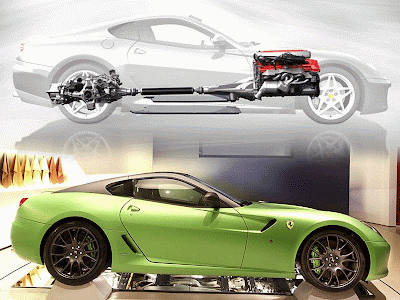
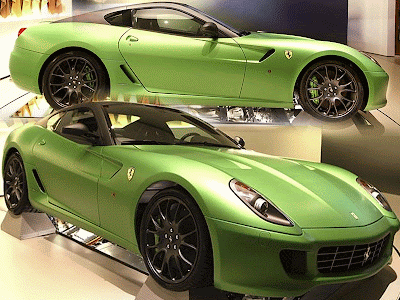
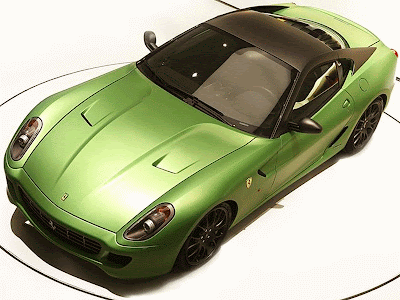
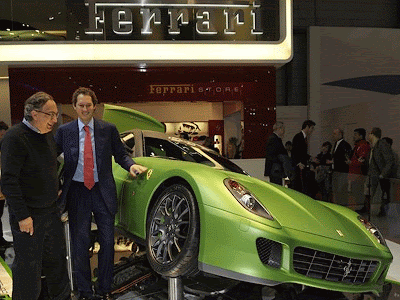
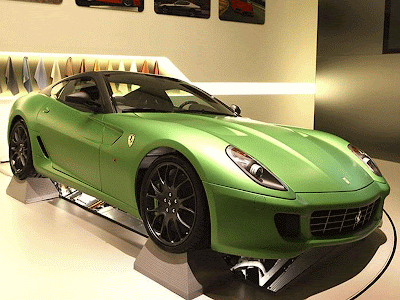
2013 Ferrari Sports Cars 599 Fiorano HY-KERS Hybrid Concept - Geneva, 2 March 2013. Ferrari presents a vettura laboratorio (experimental vehicle) at the 80th edition of the Geneva Motor Show based on the 599 GTB Fiorano equipped with an advanced new hybrid transmission.
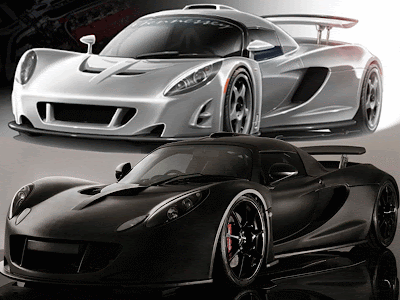
2013 Ferrari HY-KERS Hybrid Concept interior
2013 Ferrari Sports Cars 599 Fiorano HY-KERS Hybrid Concept
Ferrari made it official today and unveiled the hybrid Hy-Kers we gave you a sneak peek of, and for those of you who think the guys in Maranello are going soft by going green(er), this car is a real Ferrari that could be in showrooms soon.
2013 Ferrari HY-KERS Hybrid Concept
Maranello promises the Hy-Kers hybrid concept will offer stellar performance along with improved fuel economy and emissions. It makes that point clear in calling Hy-Kers “an example of how Ferrari is approaching the development of hybrid technology without losing sight of the performance traits and driving involvement that have always exemplified its cars.”
2013 Ferrari HY-KERS Hybrid Concept
The HY-KERS displayed at the Geneva Motor Show is an example of how Ferrari is studying the application of hybrid technology to high-performance sports cars. Central to Ferrari's objectives is maintaining the balance, handling and performance characteristics typical of its cars despite the inevitable disadvantages in terms of weight represented by applying hybrid solutions to existing models.
2013 Ferrari HY-KERS Hybrid Concept
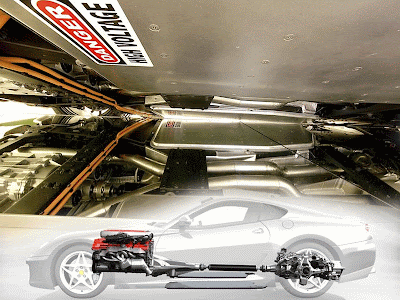
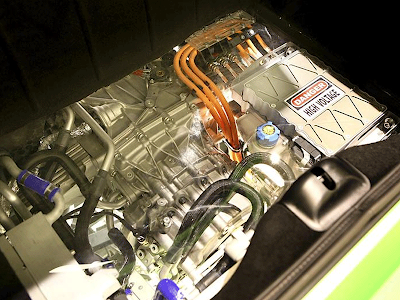
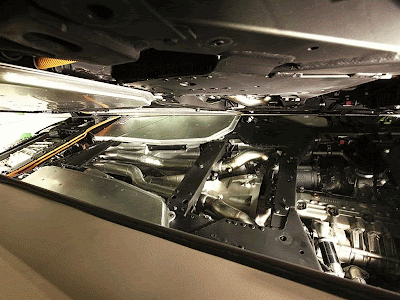
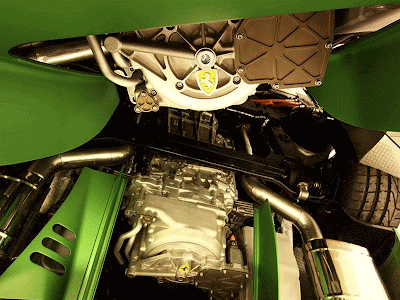
To this end Ferrari has employed its racing experience to adapt a lightweight hybrid drivetrain to the 599 GTB Fiorano with the aim of ensuring that vehicle dynamics are unaffected. This was achieved by the careful integration of all system components, positioning them below the centre of gravity and ensuring that interior and luggage space are entirely unaffected. Similarly the flat lithium-ion batteries are positioned below the floorpan of the car inside the aerodynamic underbody. The result is a centre of gravity that is even lower than in the standard car. In addition, a part of the weight gained by fitting the electric motor, generator and the batteries is offset by being able to do away with the traditional starter motor and battery.
2013 Ferrari HY-KERS Hybrid Concept
Ferrari stepped into the limelight once again this year at the 2013 Geneva Motor Show where they debuted their vettura laboratorio, the Ferrari 599 HY-KERS hybrid concept sports car. Known for their screaming V-12 exotic sports cars, Ferrari is for the first time experimenting with the inevitable future of electrification. The HY-KERS is based on the 599 GTB Fiorano, which is one of the best torque producing vehicles Ferrari has to offer, now amplified with the hybrid-electric motor rated at an astonishing 107 hp and 111 lb-ft of torque.
2013 Ferrari HY-KERS Hybrid Concept
When it comes to center of gravity (CoG), lower is better. It is a concern in any car, but this concept is essential in a sporting car. By using clever packaging, the CoG of the HY-KERS is actually lower than a traditional 599. This clever packaging also keeps the hybrid equipment from infringing on any interior space.
2013 Ferrari HY-KERS Hybrid Concept
As with most hybrids, the HY-KERS can run in full electric mode based on engine load and other factors. Unlike lesser hybrids, the HY-KERS does not feature a Continuously Variable Transmission. The electric motor mounts to the rear of a seven-speed dual clutch F1 transmission. Weighing about 88 pounds, the electric motor produces about 100hp to aid the not-anemic V-12. Hybrid battery charging is provided by using a Kinetic Energy Recovery System built on the experiences from last years Formula1 program.
2013 Ferrari HY-KERS Hybrid Concept
The new hybrid system incorporates pioneering engineering principles into every detail of the vehicle. The flat lithium-ion batteries are located on the floor pan of the car resulting in a lower center of gravity. The compact electric motor of the HY-KERS is coupled with a dual-clutch 7-speed transmission. Ferrari’s goal was to offset every kilogram increase in weight by a gain of at least one hp from the electric motor.
2013 Ferrari HY-KERS Hybrid Concept
The vehicle incorporates a similarly designed system to that of Ferrari's Kinetic Energy Recovery System (KERS) from last year's Formula One program. Under braking the electric drive unit acts as a generator, using the kinetic energy from the negative torque generated to recharge the batteries. This phase is controlled by a dedicated electronics module which was developed applying experience gained in F1 and, as well as managing the power supply and recharging the batteries, the module also powers the engine's ancillaries (power steering, power-assisted brakes, air conditioning, on-board systems) via a generator mounted on the V12 engine when running 100 per cent under electric drive. It also incorporates the hybrid system's cooling pump. Ferrari has also applied this F1 technology to help optimize the dynamics of the car, enhance traction and improve overall braking balance of the HY-KERS.
2013 Ferrari HY-KERS Hybrid Concept
Ferrari hasn’t gone too far out of its league. The 599 HY-KERS will still integrate with the original V-12 hyper-revving engine allowing the driver to snap the throttle open and be tossed back against the seat faster than the original model. Ferrari claims the hybrid stallion can achieve 124 mph in 7.5 seconds, 0.4 seconds faster than the current 599. The seeds have been sown in Ferrari’s debut of green technology.
Ferrari hopes to have Hy-Kers technology in showrooms within three to five years. The system can be adapted to front- or mid-engine vehicles, according to Automobile, and the first production car to use it will be available only as a hybrid. According to the Daily Mail, Ferrari says the technology could double the cost of the 599, but Maranello hopes to bring those costs under control as it ramps up production.

New 2013 Venom GT Hennessey Supercar Concept Car

Venom GT Hennessey Supercar Concept Car
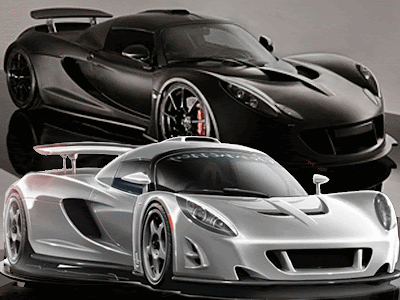
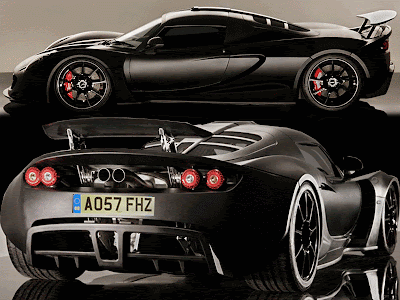
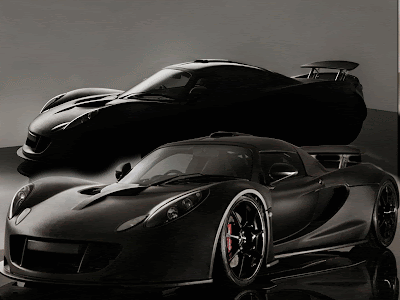
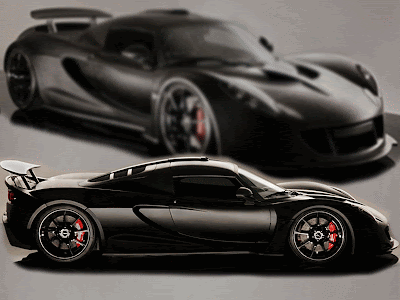
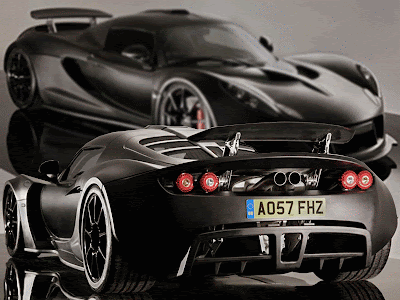
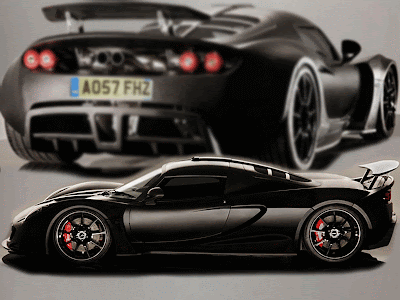
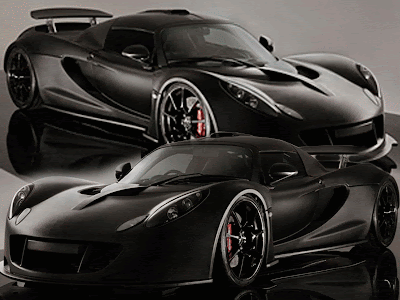
New 2013 Venom GT Hennessey Supercar Concept Car - Hennessey Performance Engineering today announced that it is introducing the company's first concept car - The Venom GT. Penned by British auto designer, Steve Everitt, the Venom GT would incorporate Hennessey's potent Venom 1000 Twin Turbo Viper V10 powerplant into a light weight mid-engine chassis weighing "under 2,700 lbs". Power would be run through a 6-speed transmission or optional sequential gearbox. With a power to weight ratio of just 2.7 lbs per bhp Hennessey estimates that the Venom GT could attain 0 to 100 km/h times in less than 2.5 sec. and a 0-300 km/h time of around 14 seconds.
Venom GT Hennessey Supercar Concept Car
Venom GT Hennessey Supercar
The Hennessey Venom GT weights less than 2,400 lbs (1,071 Kg) and to stop the Venom GT, Hennessey added Brembo brakes with 6-piston calipers up front and 4-piston calipers in rear clamping down on 15-inch carbon ceramic rotors. Hennessey plans on building 10 units of the Venom GT annually and four have already been sold at around $600,000 a pop. That means there are only six units left from the first allocation.
Venom GT Hennessey Supercar interior
Venom GT Hennessey Supercar
SEALY, TEXAS & SILVERSTONE, ENGLAND, March 29, 2013 - Hennessey Performance is pleased to introduce the first official images of its Venom GT supercar. Based upon the Lotus Elise, the Venom GT combines a high-tech, lightweight British chassis with a powerful American V8.
Venom GT Hennessey Supercar Concept Car design
Venom GT Hennessey Supercar
“This is not the first time that Britain and America have joined forces to produce a weapon of mass propulsion”, said company founder and president, John Hennessey. “Over fifty years ago the American-built P-51 Mustang fighter aircraft was flown into history powered by a British Rolls-Royce Merlin engine. Today the Hennessey Venom GT promises to set a new standard of power to weight ratio in the rarefied air of today's supercar market.”
Venom GT Hennessey Supercar Concept design Car
Venom GT Hennessey Supercar
In the case of the Venom GT, less weight means more performance. The Venom GT will have a production curb weight of less than 2,400 lbs (1,071 kilos) aided by its lightweight carbon fiber bodywork and carbon fiber wheels. Stopping power is delivered via Brembo brakes with 6-piston calipers up front and 4-piston calipers in rear clamping down on 15-inch carbon ceramic rotors.
Venom GT Hennessey Supercar picture
Venom GT Hennessey Supercar
The Venom GT’s base power plant is the supercharged 6.2 liter LS9 V8 (the same as in the Corvette ZR1) tweaked by Hennessey to 725 bhp. The company will also be offering 1000 bhp and 1200 bhp twin turbo V8 engine variants. The mid-engine V8 will transmit its power to the rear tires via a Ricardo 6-speed gearbox.
2013 Venom GT Hennessey Supercar Concept Car
Venom GT Hennessey Supercar
Hennessey plans to manage power output by using a programmable traction control system. CFD (computational fluid dynamic) tested bodywork and down force will also help keep the Venom stable at speed. An active aero system with adjustable rear wing will deploy under varying conditions on both the road and racetrack. An adjustable suspension system will allow ride height adjustments according to speed and driving conditions. Finally, power will be put to the ground via massive Michelin PS2 tires.
Venom GT Hennessey Supercar Concept Car
Venom GT Hennessey Supercar
Hennessey will be building the power plants at its Texas facility. The engines will then be air freighted to the company's assembly facility near Silverstone, England where the Venom GT is built and tested. Venom GT buyer will be offered a 1-day driver orientation and instruction program by a Hennessey factory test driver, at a track in the UK or USA prior to delivery.
Venom GT Hennessey Supercar Concept Car
Venom GT Hennessey Supercar
Hennessey plans on building 10 units of the Venom GT annually and four have already been sold at around $600,000 a pop. That means there are only six units left from the first allocation. The company plans to establish a network of Venom GT dealers and distributors in the Middle East, Europe, Russia, Australia and Asia with Venom GT Hennessey Supercar Concept Car